Contact Us

Red Foxes

Identification

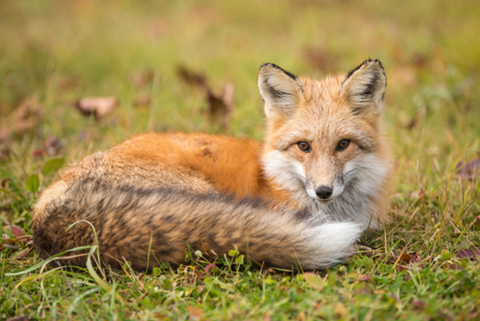
  • The red fox is dog-like in appearance, with an elongated pointed muzzle and large pointed ears that are usually erect and forward. They have thick, soft body hair and a furry, bushy tail. Red foxes are colored with a light-orange coat, black legs, lighter-colored underfur and a white-tipped tail.
Biology

  • Breeding period: January- March
  • Gestation:  51-53 days
  • Birth period:  March-May
  • Litters per year: 1
  • Litter size:  4-9
  • Feeding period:  Preference for night; may hunt in daylight
  • Foxes are opportunistic feeders, feeding on small animals such as rabbits and mice, insects, birds and bird eggs and often poultry birds, vegetables and nuts.
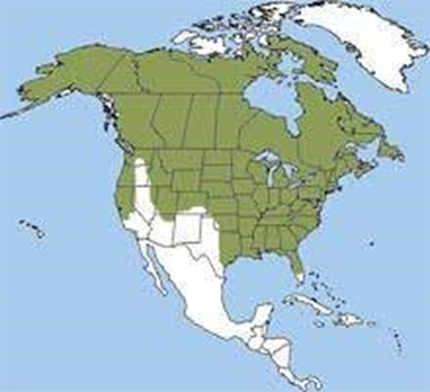
  • Range

Inspection

  • Customers typically call to request fox removal because of sightings on or around their property. They may have pets or small children and have safety concerns.
  • Communication is key when handling a fox job and gathering all  information from a client will be very beneficial. Details to remember are:  What time are they seeing the animal? What location? Are there travel patterns? This conversation with the customer will go a long way in determining success during a trapping service.
  •  Fox generally utilize a small to medium sized home range when compared to other canines like coyotes. Keep this in mind as it will help in determining the best trap placement.
  • Most calls for problem foxes occur during and right after the birthing season (March/April/May) when kits are being weaned and switched over to solid food.
  • During this time the dog and vixen will both be hunting and bringing food to the pups at the den site.
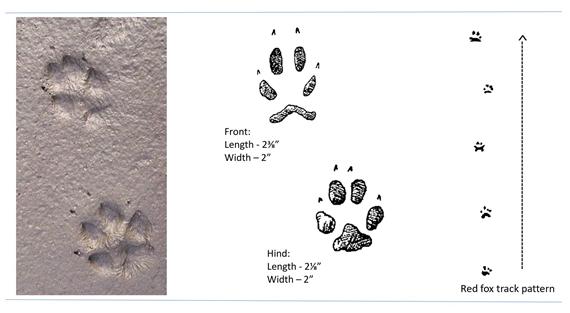
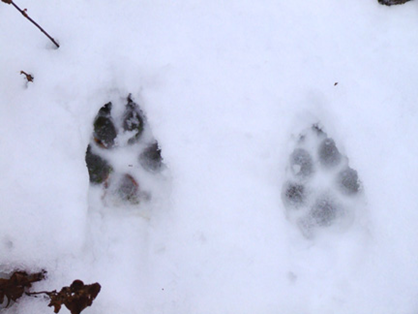
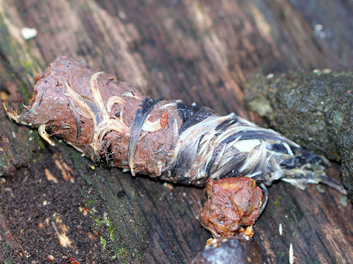
  • While conducting an initial inspection look around the property lines for trails entering and exiting areas of cover like thick weeds and dense brush. Inspect these areas for tracks as well as droppings that will consist of hair, feathers, and crushed bone.
  • Additionally, locating a den site can be beneficial if it is located on the property that trapping trapping is being done at.
  • In most circumstances these will appear much like large groundhog burrows and have bones/small animal parts scattered about the entrance.
  • There will also be a strong musky (fox) odor emanating from the entrance.  
Fox Tracks
Fox Tracks in Snow
Fox Droppings

Control

  • Use of one-way doors (Varment Guardian) is the preferred control method for foxes under decks and outbuildings.
  • Foothold traps and live traps can also be used for red foxes. 
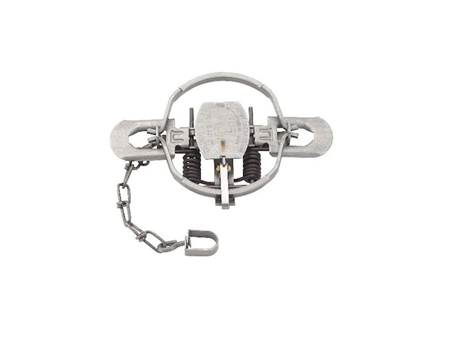
  • The primary trap used for fox is an offset foothold, ranging in size from #1.5 up to #2. 
Offset Foothold Trap
  • Eviction fluid is also an option for control.  This involves placement of a natural coyote gland by-product in the den area. The female fox senses danger in the area and will instinctively relocate the den.
  • Exclusion will also be proposed to keep foxes from going underneath structures. The type of exclusion would be a buried wire.  This would be required to be accepted if the removal method is Varment Guardian.

Pro Tips

  • Unexperienced canine trappers should always contact a supervisor  or an experienced technician when working on this type of job.
  • Please be aware that the likelihood of non-target catches with these traps is very high, as all small carnivores, domestic pets included, will be attracted to the baits and lures used.
  • Always communicate these risks with the customer and discuss the movement and location and of pets on the property.
  • Two very successful types of foothold sets are the dirt-hole and flat set. 
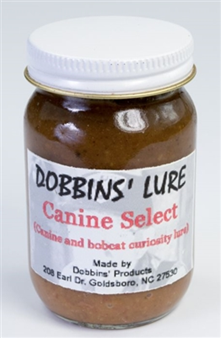
  • Choice baits/lures include: Blackie's Blend Deathwind, Proline Selector Fox Gland, Dobbin's Canine Select.
Dobbin's Canine Select