Contact Us

Chipmunks

Identification

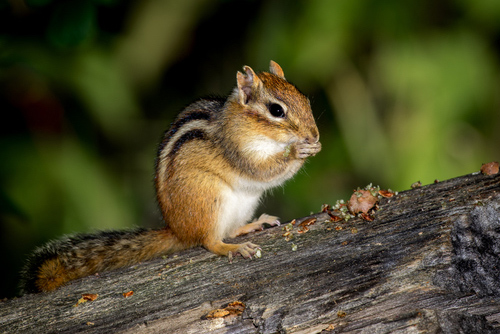
  • By far the most common chipmunk in our service area is the Eastern chipmunk. Eastern chipmunks can be easily recognized by the fact that they have only three stripes on their back. They are approximately 8-10 inches long including a 3-4 inch tail.

Biology

  • Breeding period: February- April and June- August
  • Gestation:  31 days
  • Birth period:  March- May and July-September
  • Litters per year: 1-2
  • Litter size:  2-5
  • Feeding period: Day
  • Chipmunks primarily eat seeds, acorns, nuts, fruits, plant bulbs, and tubers.
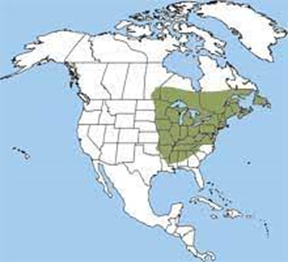
  • Range

Inspection

  • Chipmunks are found throughout Varment Guard service territory. Customers will sometimes request removal due to damage in landscaping and lawns.  Chipmunks will undermine patios and walkways causing them to become unlevel or sink.  They occasionally find access to a crawlspace or house as well.
  • Remember to use the information provided by the customer as a starting point for your inspection. This may come from direct communication with the customer or the notes from client service detailed in the work order/proposal. 
  • On initial inspection start by walking the exterior of the home.  Look for holes dug by chipmunks in landscaping and lawns. Check for damage to vegetation as chipmunks will chew on some plants.
  • If the chipmunks are entering a building, the customer will sometimes report hearing noises similar to those made by mice.
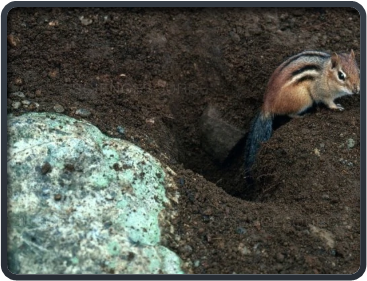
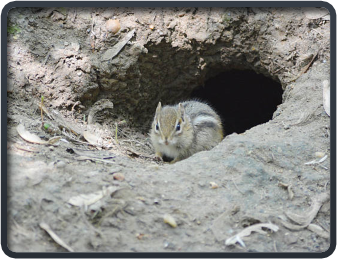
Chipmunk Burrow
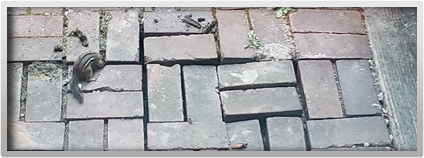
Chipmunk Damage to Brick Patio
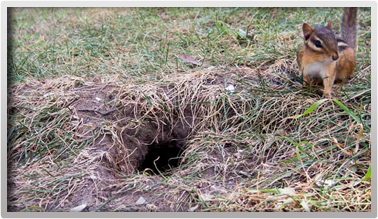
Chipmunk Burrow

Control

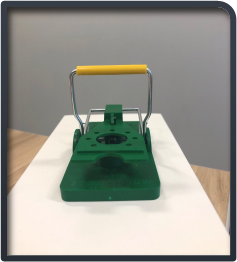
  • Population control is offered for chipmunks.  This is done by means of trapping using either small live traps, snap traps or lethal gripping traps.
  • Baits include peanut butter, shell peanuts, apples and black oil sunflower seeds and professional baits and lures (Jameson’s Piney Bluff On-Target Pecan and WCS Tree Berry).
  • An exclusion proposal can be provided for chipmunks getting into or underneath structures. Common exclusion for chipmunks may include:  buried wires, foundation vent covers, door sweeps, sealing cracks and gaps in foundation, sealing utility penetrations. 
Snap Trap

Pro Tips

  • Make sure to check state laws on chipmunks trapping.  Daily trap checks may be required in some states.
  • The entrance to a chipmunk burrow can be quite large as they run into a burrow when they are frightened and trying to escape danger.  When they do this it widens the entrance.
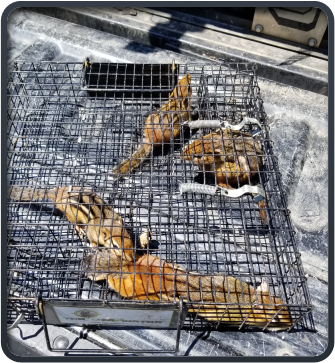
  • The multi-catch Chipmunkinator trap is a good option for population control.  Multiple chipmunks can be caught at once in this trap.
Chipmunkinator Trap
 Large Burrow Entrance