Contact Us

Birds

Unprotected Birds

There are only 3 species of birds that are considered pests and are not protected by law. These are: feral (wild) pigeons, house sparrows and starlings. All other birds, while occasionally causing problems, are not considered to be pests and are protected. Examples are Canada geese, woodpeckers, seagulls and barn swallows. These birds may only be killed after other methods have failed, and only after a permit has been obtained from the U.S. Fish & Wildlife Service.

Pigeons
Identification

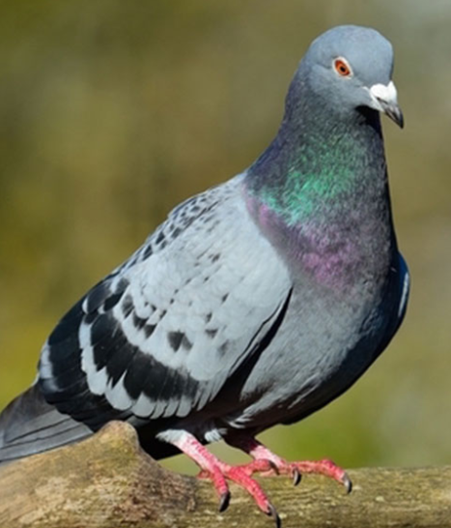
  • The pigeon has a large, stout body and short wings, short bill, and smooth, compact plumage. Adult body weight is around 13 oz and adult body length is around 11 inches. There are many domesticated varieties, differing greatly in color patterns but most are blue-grey with red feet. Their familiar “coo” is easily recognized. 

Biology

  • Birth period:  Peak in spring and summer
  • Egg incubation period:  17 to 19 days
  • Broods per year: Several
  • Brood size:  1-2 eggs (usually 2) per clutch
  • Age at which young leave nest:  4 to 6 weeks
  • Activity seasonality:  year-round
  • Pigeons feed on seeds, grain, livestock feed, livestock manure, discarded food
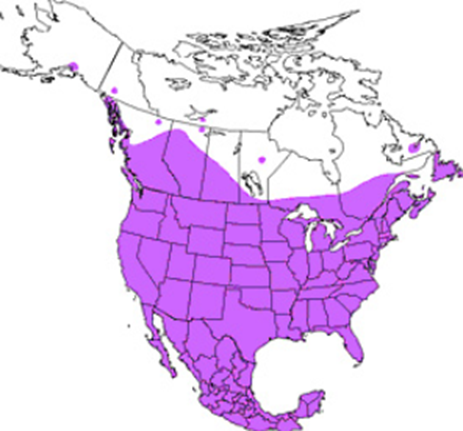
  • Range

Inspection

  • Nests consist of crude and flimsy platforms made of sticks, twigs, and grasses, built on ledges, windowsills, and roof parapets of buildings in cities. There are normally 2 white eggs requiring 17 - 19 days for incubation. 
  • Pigeons are diurnal (active during the day) and comfortable around people, making their presence easy to detect.
  • Pigeon droppings can create a mess on canopies, buildings and the ground.  These droppings not only look bad but can pose a health risk to humans.
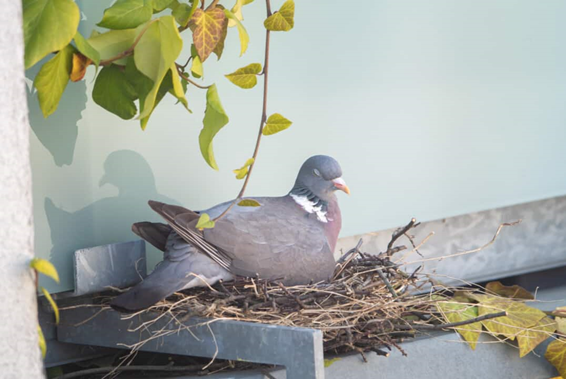
Pigeon Nest
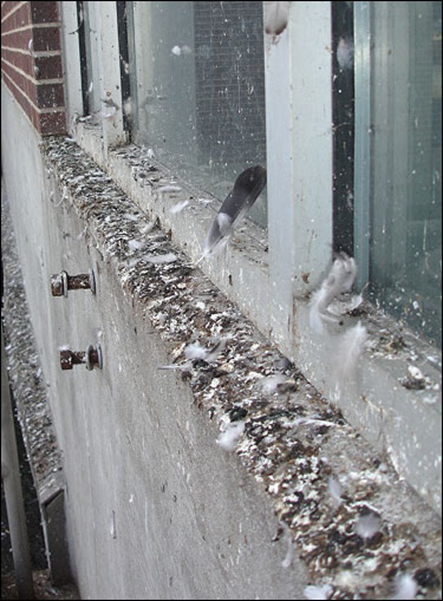
Pigeon Droppings

Starlings
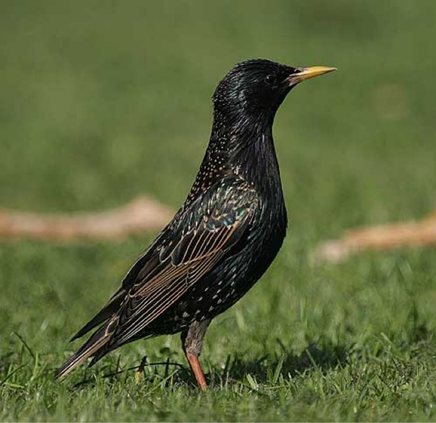
Identification

  • Starlings are robin-sized birds weighing about 3 - 4 ounces. Their body is stocky and short-tailed. Adults are dark with light speckles on their feathers which may be hard to see from a distance. Both sexes have a yellow bill during their reproductive cycle (January through June), and a dark-colored bill at other times. Juvenile starlings are grayish in color. Starlings resemble some blackbirds, but their flight is direct and swift, not rising and falling like many blackbirds.

Biology

  • Birth period:  Spring and summer
  • Egg incubation period: 11 to 14 days
  • Broods per year: 2
  • Brood size: 2 to 8 eggs (usually 4 to 6) per clutch
  • Age at which young leave nest: 3 to 4 weeks
  • Activity seasonality: Year-round
  • Starlings feed on fruits, seeds, grain, insects, livestock feed, discarded food.
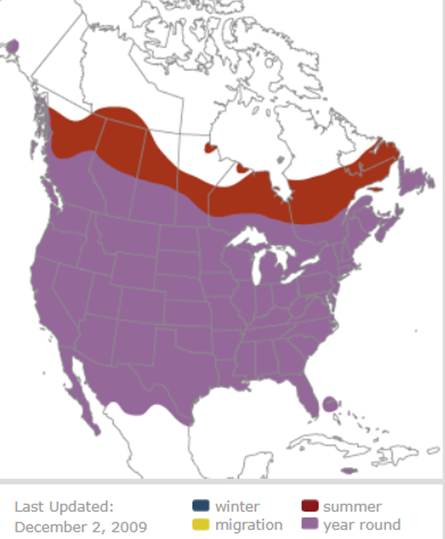
  • Range

Inspection

  • Starlings nest in any type of cavity they can find, including tree holes, birdhouses, sheltered ledges, and among rocks.
  • Starlings create problems nesting on or in buildings. Starlings have adapted well to cities and suburbs where roosting on building ledges, lighted signs, marquees, billboard bracing, hollow lamp posts, soffits, as well as dryer and stove exhaust ducts and vents. In residential settings, nesting in bathroom, stove, and dryer exhaust vents is the type of starling activity most homeowners will experience. Starlings add to their nests year after year, so nests in the attic can become quite large.
  • Starlings can form large flocks into the thousands, which can create a lot of noise from vocalizations and feces on buildings, cars, and walkways. Droppings can pose a risk to human health.
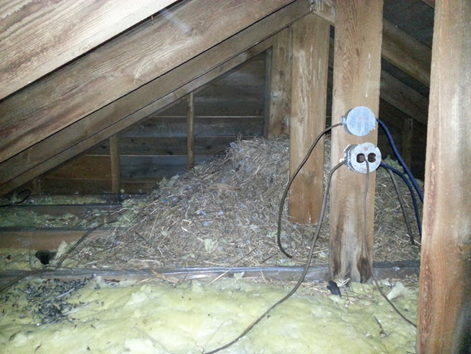
Nest in Attic
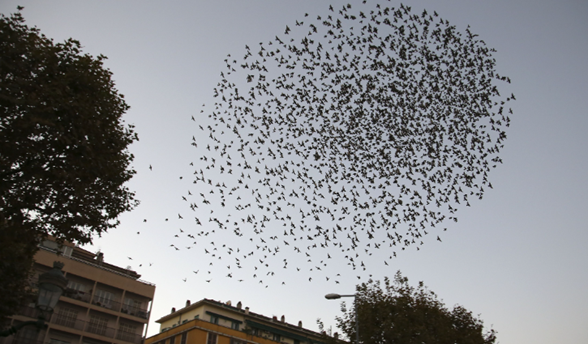
Large Flock

Sparrows
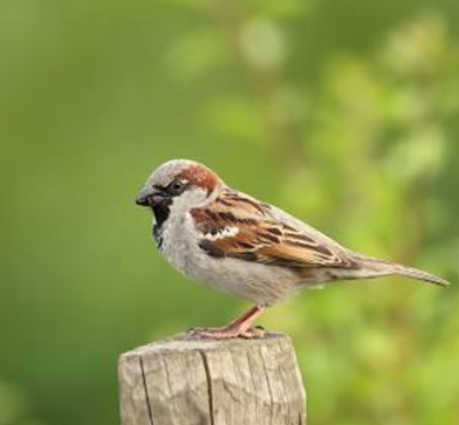
Identification

  • The English sparrow, or house sparrow, does not belong to the sparrow family at all but to the Old-World weaver finches. They were introduced about 100 years ago and have spread throughout most of the United States and Canada. Sparrows have grayish-brown coloring. Males have a black throat with white cheeks. Sparrows hop about, and never walk.

Biology

  • Birth Period:  March through August
  • Egg incubation period: 10 to 17 days
  • Broods per year: 2 to 5
  • Brood size: 3 to 9 eggs (usually 5 to 6) per clutch
  • Age at which young leave nest: 3 weeks
  • Activity seasonality: Year-round
  • Sparrows feed on fruits, seeds, grain, insects, livestock feed, discarded food.
  • Range

Inspection

  • Sparrows spend much of their time feeding on the ground. Sparrows are very localized in their habits. They live, feed and nest all in the same area. This means that, once a flock is eliminated from the area you are working on, others are not likely to move in quickly.
  • Sparrows prefer to nest in cavities.  Nests are often built in the eaves, vents, overhangs and other crevices of houses and buildings as well as holes in cliffs and banks, tree hallows.  They build messy nests out of anything they can find including twigs, grass and string.
  • Sparrows are well adapted to living amongst humans, with their food and nesting areas being very dependent on humans.
  • Sparrows create problems with their messy nests and droppings left on the buildings they inhabit. In addition to their messy nests and the contamination and defacement caused by droppings, sparrows damage rigid foam board and other soft insulation in warehouses and in poultry and hog-raising facilities. In electrical substations, their nests have been known to cause short circuits and fires. Their nesting, roosting, and feeding activities may all contribute to the sparrow’s pest status.
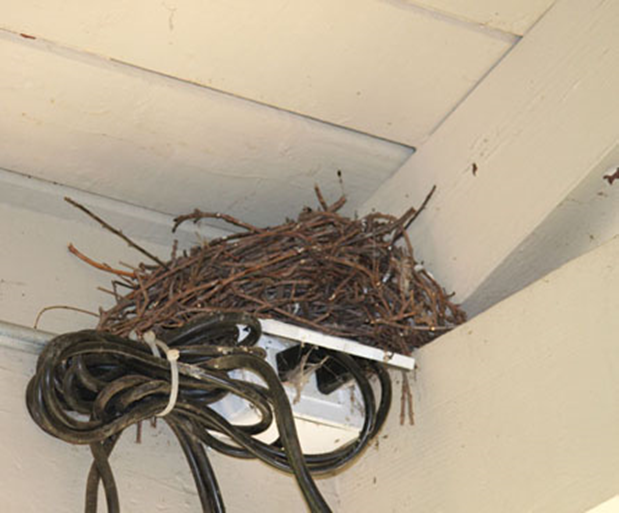
Nest
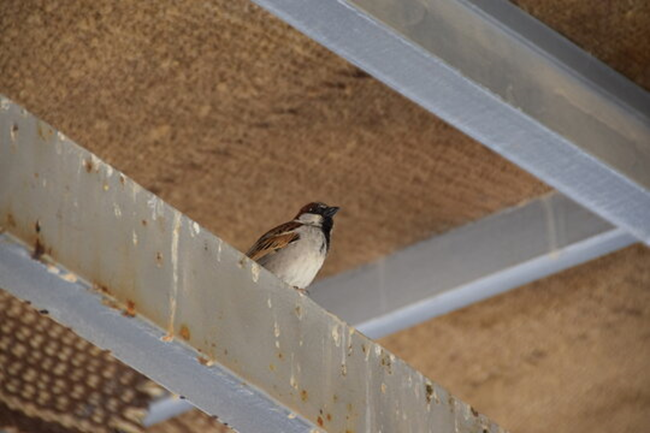
Droppings
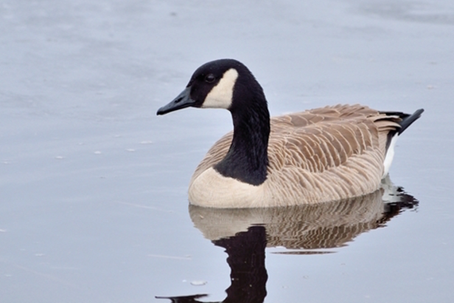
Canada Goose

Identification

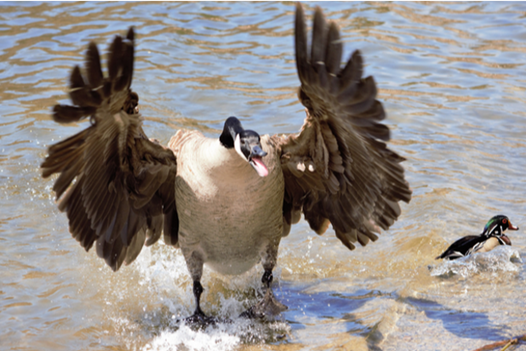
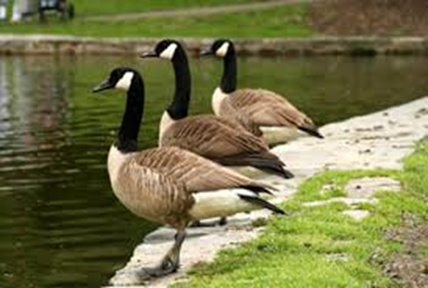
  • Canadian Geese are easily identifiable by their black-neck and signature white chinstrap markings. They are a large bird, between 10-20 lbs, that is often seen flying in V formation. They are often a nuisance in grassy areas around ponds in parks, apartment or office complexes.

Biology

  • Birth Period:  May thru June
  • Egg incubation period: 28 days
  • Broods per year: 1
  • Brood size: 4 to 8 eggs per clutch
  • Age at which young leave nest: 3 weeks
  • Activity seasonality: Year-round
  • Geese feed on aquatic vegetation, grasses, clover, waste grain, winter weed bird seed.
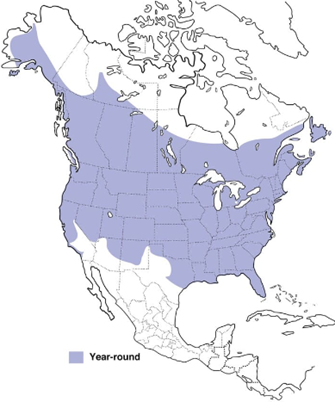
  • Range

Inspection

  • Man-made lakes and ponds attract Canadian Geese to areas for nesting, feeding and breeding.
  • Nesting sites are typically near water with protective vegetation nearby.
  • Geese are often aggressive when protecting their nests. If people or pets get too close to the nest, they risk injury. Businesses may request service because aggressive geese are a problem for customers entering the building.
  • In areas with goose activity, their droppings can litter the ground. The birds damage grass and lawns and create health hazards.
  • Goose problems are most common between February and August when they are nesting.

Control

  • Before attempting any goose work make sure you are familiar with all state and federal laws. Talk to your supervisor to get more information about your specific state.
  • Start with an inspection to determine the best control method.
  • Some goose control does not require a permit, including:

            -Harassment using dogs or lasers can scare geese away from an area. Varment Guard has dogs trained for goose control in some areas.

             -Repellents such as Flight Control can be applied to areas where geese are a problem.

             -Deterrents such as lights placed on a pond can discourage from landing nearby.

  • A permit is required before handling a goose or nest with eggs. The client will fill this out. When a permit is issues, it will list what control options have been approved and could include:

           -Nest removal as an option for problems with aggressive geese during nesting season. The nest and eggs are destroyed and removed.

           -A goose round up is an option for more extensive activity around ponds. Geese are herded into an enclosed area and removed from the location. The permit determines what is done with the geese after removal.

           -Egg addling/oiling for population control. Addling involves temporarily removing fertilized eggs from the nest and killing the embryo. This can be done by coating the egg with 100% food grade corn oil which blocks the pores.

Woodpeckers

Identification

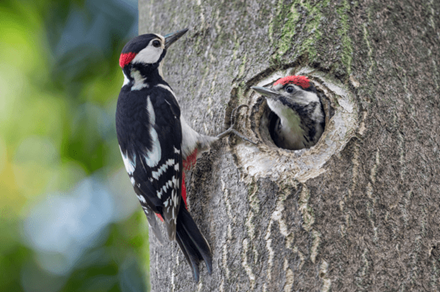
  • Woodpeckers are territorial birds that are most active in the spring and fall. They cause damage to wooden areas on houses or buildings. Common species include: Downy woodpecker, Hairy woodpecker, Red-headed woodpecker, Red-bellied woodpecker.

Biology

  • Birth Period:  Spring and Summer
  • Egg incubation period: 11-14 days
  • Broods per year: 1 to 3 (depending on species)
  • Brood size: 3 to 8 eggs per clutch (depending on species)
  • Age at which young leave nest: 2-5 weeks
  • Activity seasonality: Year-round
  • Woodpeckers feed on insects, acorns, nuts seed, suet, berries and other fruits
  • Range (varies by species)

Inspection

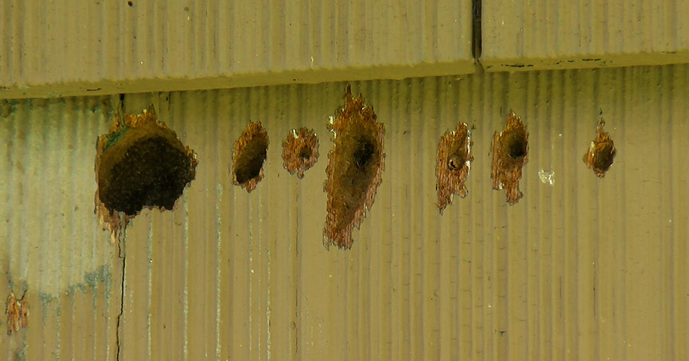
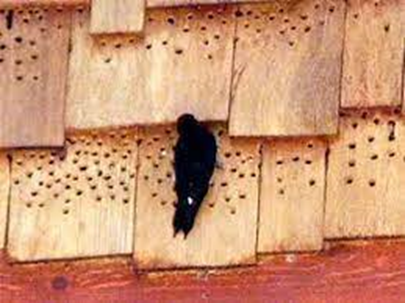
  • Damage to wooden areas of homes or buildings can include holes drilled into siding, eaves, window casings, etc.
  • A hole may be used as a nesting sight.
  • There three reasons that different species of woodpecker may be pecking on wood: to search for food such as insect larvae, to drill nesting cavities, and to announce their territory to other male woodpeckers (drumming).

Control

  • Before performing any woodpecker work make sure you are familiar with all state and federal laws.
  • An inspection should be done to determine the best control methods.
  • Services include exclusion of areas damaged by pecking. (see exclusion standards and guidelines)
  • Some woodpecker control does not require a permit, including:

              -Deterrents with our most common option being the installation of an Intimidator (see below). The intimidator needs air flow to be effective and should be hung near damaged area with the sunlight reflecting on or near the area. For larger woodpecker issues, multiple Intimidators should be hung.

                   -Repellents are another option. Migrate can be applied to an area approximately 2 ft square around the damage. Optical gel or Pignx can be applied around the hole itself.

  • Woodpecker control involving removal of the bird is an option with a permit. The client should apply for the permit.

                 -Trapping can be done using snap traps placed around the hole where the woodpecker would enter. To increase the catch area add a tie wire to the trap.

                 - Shooting is another option for removal. A pellet gun is used and safety and discretion are key if this method is used.

Gulls

Identification

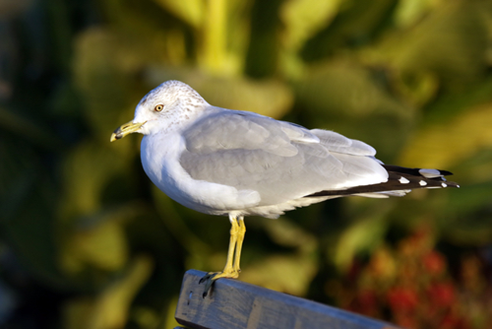
  • Gulls are members of a large family of seabirds, often known as seagulls. They commonly have white bodies with grayish backs and vary in size depending on the species.

Biology

  • Birth Period:  Spring
  • Egg incubation period: 19-28 days
  • Broods per year: 1
  • Brood size: 2-5 eggs per clutch (usually 3-4)
  • Age at which young leave nest: 5-8 weeks
  • Activity seasonality: Year-round
  • Gulls feed on fish, mollusks, crustaceans, insects, rodents, discarded food and garbage
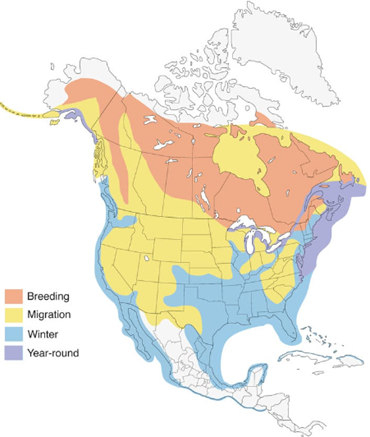
  • Range (varies by species)

Inspection

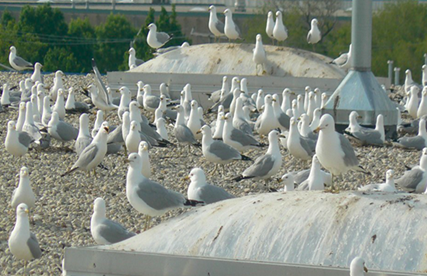
  • Large groups of gulls contaminate areas such as airports, dumps, landfills and buildings like shopping centers near food and water sources like beaches and lakes with their droppings.
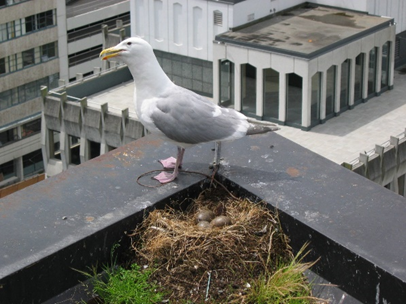
  • Nesting areas are commonly found on rooftops.
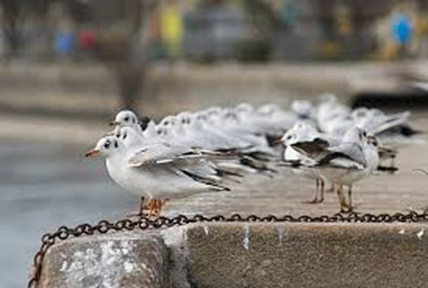
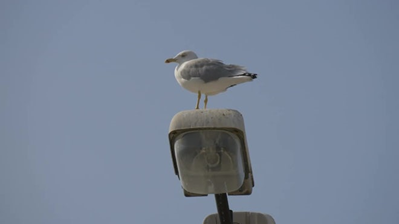
  • Loafing areas include light poles in parking lots, parapet walls and docks.
Gulls on a Dock
Gulls on a Roof
Gulls Nesting on Parapet Wall
Gulls nesting on Light Pole

Control

  • There are a variety of methods that can be used for gull control
  • This work is typically sold by a Commercial Bird Specialist
  • See commercial bird control section

Chimney Swifts

Identification

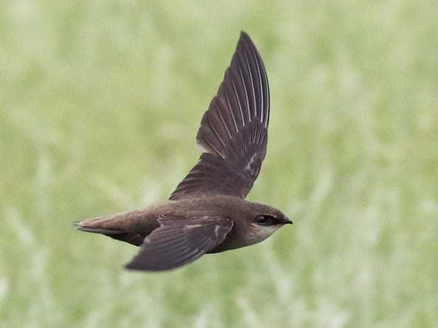
  • Chimney Swifts are very small sooty-gray birds with slender bodies and very long, narrow, curved wings. They have round heads, short necks, and short, tapered tails. The wide bill is so short that it is hard to see.

Biology

  • Birth Period:  Late April-May
  • Egg incubation period: 19 days
  • Broods per year: 1
  • Brood size: 4 to 5 eggs per clutch
  • Age at which young leave nest: 14 to 18 days
  • Activity seasonality: April thru September
  • Chimney Swifts feed on small flying insects
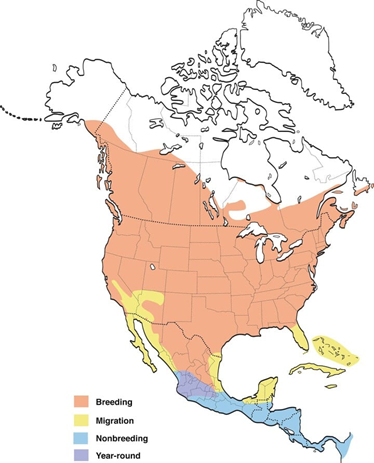
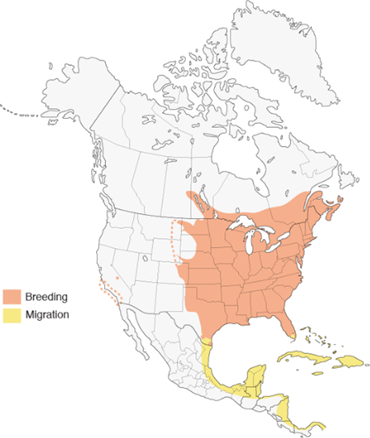
  • Range

Inspection

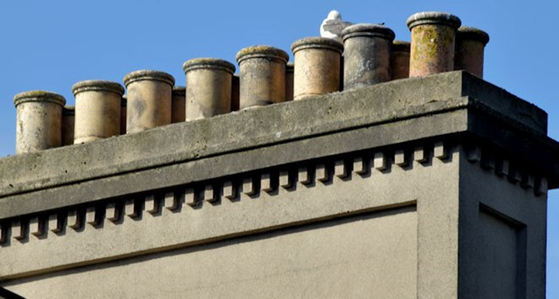
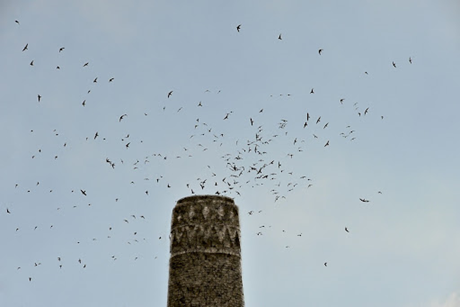
  • Chimney swifts often become a problem because they build their nests in residential chimney flues, above fireplaces and on boiler smokestacks of industrial buildings. Homeowners may report raspy “chitter-chatter” or chirping from a fireplace during the 14-18 days that chicks are in the nest.
  • Homeowners may see chimney swifts flying in and out of their chimney. To determine if the problem is bats or swifts, observe the time of day they are entering or exiting. Chimney swifts will fly into a chimney at night and bats will fly out of it at night.

Control

  • Exclusion in the form of a chimney cap is the best method of control for chimney swifts.
  • Chimney caps should be installed in late summer after juvenile birds have left the nest.

Wild Turkeys

Identification

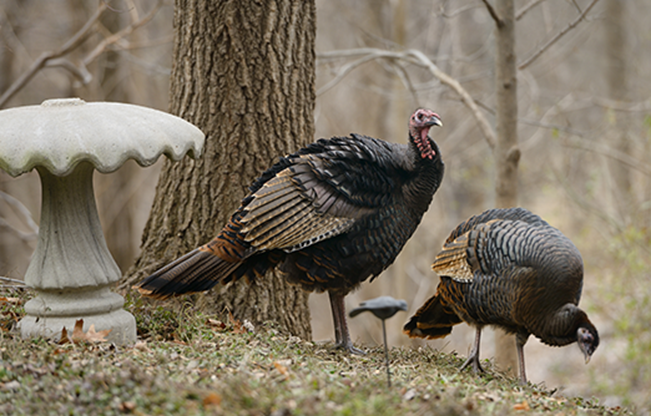
  • Wild Turkeys are dark overall with a bronze-green sheen to most of their plumage. Their wings are dark and barred with white while their tail feathers are also tipped with rusty or white. Their head and neck are bare of feathers with coloration ranging from red to blue to grey.

Biology

  • Birth Period:  Late March-May
  • Egg incubation period: 28 days
  • Broods per year: 1
  • Brood size: 8-16 eggs per clutch
  • Age at which young leave nest: Within hours of hatching
  • Activity seasonality: February thru September
  • Turkeys feed on small flying insects, seeds, grains forbs and grasses
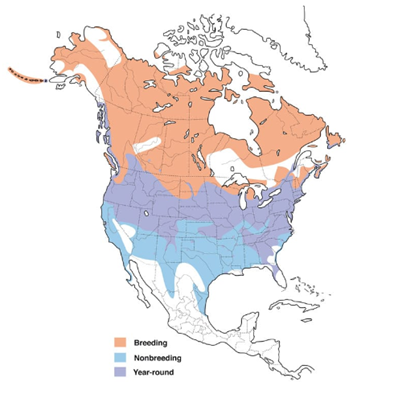
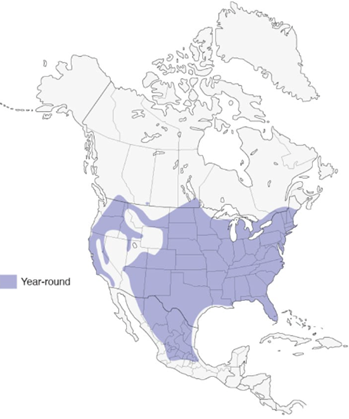
  • Range

Inspection

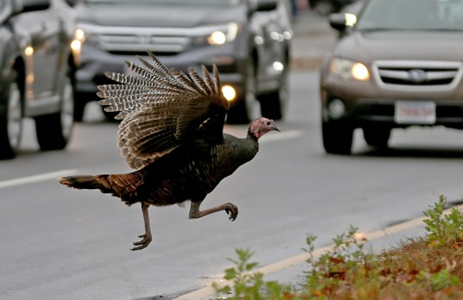
  • Wild turkeys may become a nuisance when they take up residence on a property, leaving a mess and occasionally becoming aggressive toward humans.
  • This is most commonly a problem in the state of Minnesota.
  • They can become territorial when they see their reflection in windows of homes or cars.

Control

  • Deterrents are the best option for wild turkey control, with holographic deterrents that reflect light commonly used.
  • Advise client on avoiding issues with turkeys by making sure they do not feed turkeys and make sure that birdfeeders are not providing a food source.

Bird Control

See residential or commercial bird control sections for more information.